


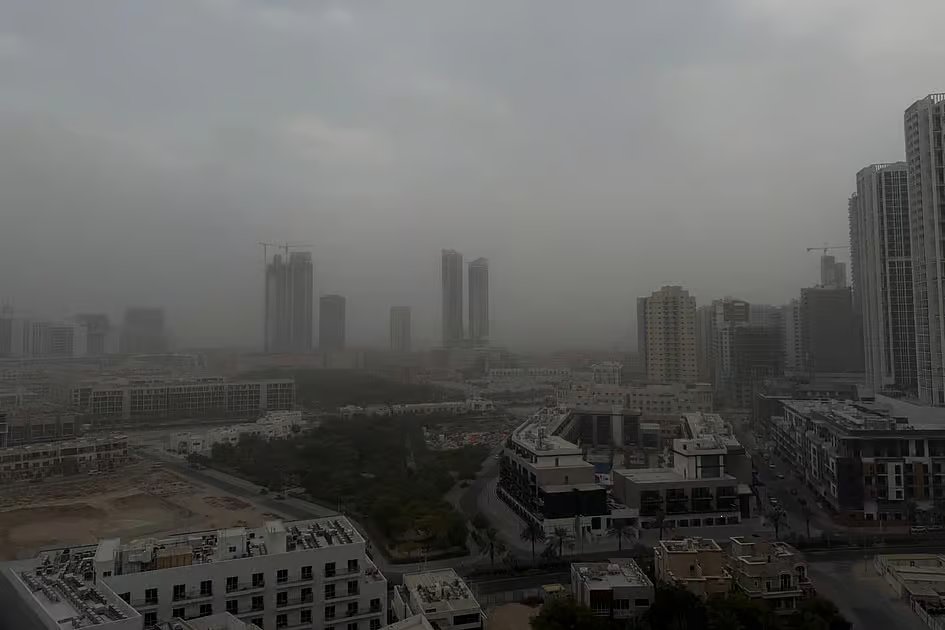
The UAE has launched a six-year national plan to protect residents from the health effects of rising heat, humidity, dust storms, poor air quality and extreme weather.
The Health Sector Climate Adaptation Plan, covering 2026 to 2031, will focus on early warnings, stronger disease monitoring and ensuring hospitals and essential health services can continue operating during climate-related disruptions.
Announced by the Ministry of Health and Prevention (MoHAP) during the Abu Dhabi Future Health Summit, the plan identifies six priority health areas: heat-related illnesses, cardiovascular and respiratory diseases, vector-borne diseases, water- and food-borne diseases, and mental health.
Stay up to date with the latest news. Follow KT on WhatsApp Channels.
Hot and humid conditions can increase the risk of heat exhaustion and heatstroke, while also placing added strain on people with heart conditions. Dust storms and poor air quality can trigger asthma attacks and worsen respiratory illnesses, particularly among children, older residents and those with existing health problems.
The plan also looks at how changing weather conditions could affect mosquito-borne diseases and food and water safety. Extreme weather events can interrupt access to hospitals, medicines and medical supplies, while the disruption caused by such events can also affect people’s mental wellbeing.
“Guided by the directives of our wise leadership, the UAE places the protection of people and their quality of life at the heart of its health system,” said Ahmed Ali Al Sayegh, Minister of Health and Prevention.
“As our climate changes, the risks to our health change with it. Heat, dust and extreme weather affect people’s health in very real ways. Our responsibility is to anticipate these risks and protect our communities before people fall ill.”
Rather than waiting for health risks to turn into emergencies, the plan aims to help authorities spot warning signs early and act before more people fall sick.
This includes developing heat and air-quality alerts that can help residents take precautions before prolonged exposure causes illness. It will also strengthen surveillance for diseases affected by climate conditions and bring together health and environmental data to identify changing risks.
For healthcare providers, the plan places emphasis on emergency preparedness, resilient medical supply chains and coordinated response plans. The aim is to ensure essential care remains available even when extreme weather affects transport, facilities or demand for treatment.
Hussain Al Rand, assistant undersecretary for the Public Health Sector at MoHAP, said the plan would turn climate-risk assessments into practical health measures.
“This includes developing the skills of healthcare professionals, expanding specialized research, improving emergency preparedness and increasing the resilience of healthcare facilities,” he said.
“The next phase will focus on coordination among relevant entities and implementing priorities against precise indicators, helping to ensure continuity of services, protect populations most vulnerable to climate impacts and enhance the effectiveness of the health response nationwide.”
The plan was developed with the Ministry of Climate Change and Environment, health authorities and specialised partners. It is aligned with the UAE National Climate Change Adaptation Plan and supports the country’s commitments under the COP28 UAE Declaration on Climate and Health.
MoHAP said the immediate focus will be on extreme heat, air quality, early-warning systems and maintaining essential health services.
The ministry said success would not only be measured by how health services respond when a crisis occurs, but also by how much illness and disruption can be prevented before it reaches the community.
Source: Khaleej Times
