


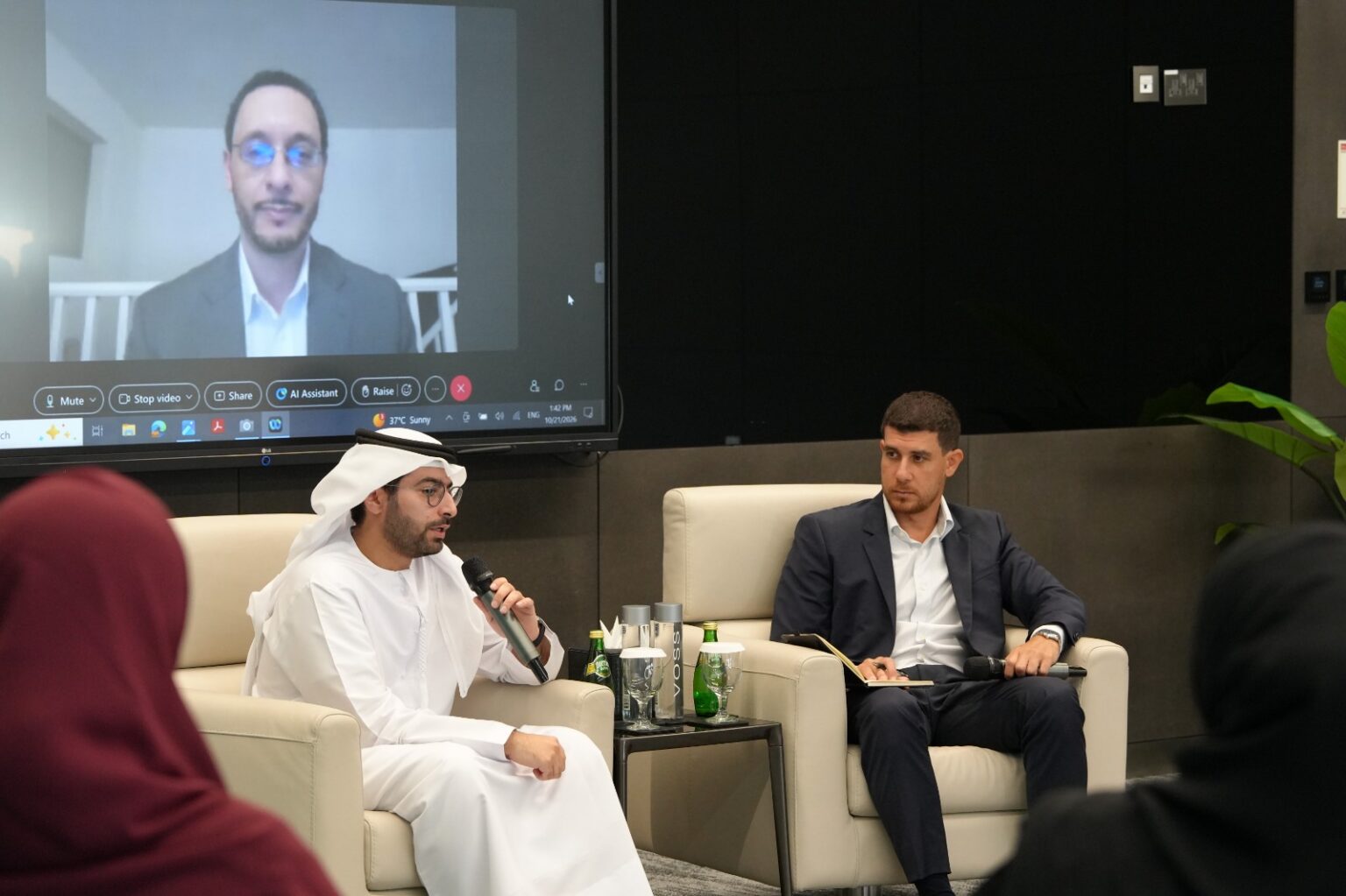
ABU DHABI, 23rd October, 2026 (WAM) — The UAE Research Programme for Rain Enhancement Science (UAEREP) participated in a fireside chat on climate change and resource security organised by the Anwar Gargash Diplomatic Academy, bringing together climate experts, diplomats and policy leaders.
The session explored the growing impact of climate change on global security, resource availability and foreign policy priorities, with discussions addressing water scarcity, food security, displacement, and competition over critical minerals and energy resources. It also examined the role of diplomacy and international cooperation in addressing climate-related risks.
During the discussion, Dr. Ahmad Al Kamali, Director of the UAEREP and Acting Head of Cloud Seeding Operations at the National Centre of Meteorology (NCM), provided an overview of the programme, highlighting its role in advancing rainfall enhancement science through research, innovation and international collaboration.
He said the programme focuses on developing and testing technologies that can translate scientific research into practical applications to support long-term water security.
“Water scarcity is a shared global challenge that requires long-term investment, scientific innovation and international cooperation,” Dr. Al Kamali said. “In the UAE, rainfall enhancement forms part of a broader national effort to diversify water resources, strengthen resilience and invest in science and technology. Through UAEREP, we are working to advance the science, translate promising research into practical applications and strengthen partnerships that can contribute to a more water-secure future.”
Dr. Al Kamali highlighted the close relationship between water, food and energy security, noting that rainfall enhancement should be viewed as a complementary component of a diversified water-resource strategy rather than an alternative to conventional water supplies. Such an approach can complement desalination, groundwater management, water conservation and wastewater reuse while supporting broader efforts to strengthen long-term resource resilience.
The discussion also highlighted the importance of cooperation between governments, academic institutions and industry in advancing rainfall enhancement research, technology development, field testing and knowledge exchange.
The session also reviewed UAEREP’s research priorities towards 2030, which focus on five strategic areas: optimised seeding materials; novel cloud formation and rainfall enhancement systems; autonomous unmanned aircraft systems; limited-area climate interventions; and advanced models, software and data.
The programme’s future direction places particular emphasis on translating scientific research into operational impact by advancing artificial intelligence, high-resolution modelling, autonomous technologies, real-time atmospheric sensing and improved methods for evaluating rainfall enhancement outcomes.
Source: Emirates News Agency
