

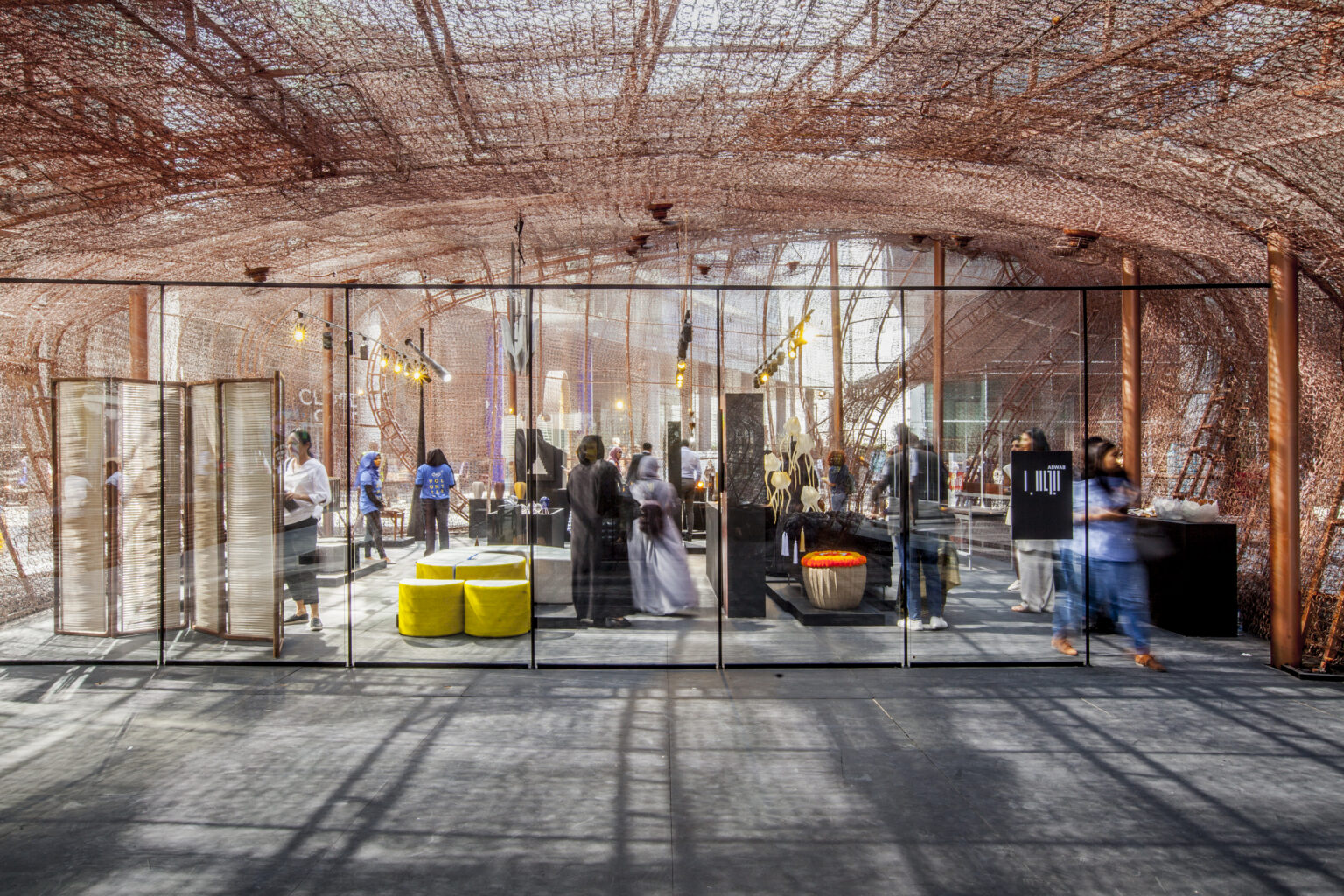
DUBAI, 6th November, 2026 (WAM) — Five creative installations at Dubai Design Week are transforming language into interactive and sensory experiences, combining light, silence, materials and traditional craftsmanship as part of the Abwab 2026 programme.
The projects explore how design can transcend linguistic and cultural barriers while reinterpreting traditional knowledge through contemporary artistic approaches.
Held under the theme “In Other Words”, the programme brings together five projects in a single exhibition space for the first time, replacing the individual pavilions of previous editions. The format encourages interaction between artists and their works while inviting visitors to explore different forms of human communication.
Abwab, one of Dubai Design Week’s leading creative commissioning programmes, continues to support designers and creative practitioners from West, South and East Asia, as well as Africa, by providing a platform for artistic experimentation, knowledge exchange and the celebration of cultural diversity.
The five participating projects, presented by Dalia Rafea, Grace Shih, Kanaka Raghavan, artist UBIK and VARUSSI Studio, explore the relationship between language, memory and identity. They transform letters, symbols, materials and sounds into visual and spatial experiences that encourage public engagement and reflection.
Designer Kanaka Raghavan’s “Cheent Devanagari” reimagines letterforms through layers of translucent fabric inspired by traditional woodblock printing. As visitors move through the installation, overlapping layers create shifting visual interpretations of the letters.
In statements to the Emirates News Agency (WAM), Raghavan said her project aims to enable visitors to explore the relationship between language and traditional craftsmanship while gaining a closer understanding of the skills involved in shaping writing systems and visual expression.
She highlighted the significance of presenting her work in Dubai, given the emirate’s cultural and linguistic diversity and its ability to bring together different cultures and writing systems, making it an ideal platform for artistic explorations of language and identity.
Artist and poet Grace Shih presents “A Library of Paper Memories”, which transforms paper from a conventional writing medium into an artistic language through handmade sheets produced from natural fibres, including lokta, abaca and cotton.
Shih told WAM that the installation explores stories that conventional pages cannot convey, inviting visitors to interpret meaning through the textures, shapes and structures of materials. She added that Abwab’s new collective exhibition format creates opportunities for dialogue between artists and designers despite their different materials and creative approaches.
Shih expressed her enthusiasm about presenting her handmade paper works in Dubai for the first time and discovering how audiences respond to them.
Exploring non-verbal communication, artist Dalia Rafea presents “Shhhhh”, a seven-metre-long installation that uses the repetition of the Arabic letter “Sheen” and red lighting to transform the sound associated with calling for silence into a visual experience with emotional and psychological dimensions.
Rafea said silence is a language in its own right, capable of expressing grief, exhaustion, self-restraint, resistance or simply the need to pause and reflect. She emphasised that human emotions do not always require words to be communicated.
She said participating in Dubai Design Week had allowed her to develop the concept into a large-scale installation and present it to audiences from different cultural backgrounds, encouraging varied interpretations of silence.
VARUSSI Studio, based in Srinagar, Kashmir, presents “Taleem”, inspired by the traditional system of symbols, numbers and colours used by Kashmiri artisans in carpet weaving and the production of Kani shawls.
The project translates this traditional system into an architectural installation based on the repetition and rotation of a wooden frame around a central point, gradually creating an interactive spatial structure that reflects the transmission of craft knowledge across generations.
The studio explained that the project explores how language can be experienced through movement and spatial interaction rather than merely read. It aims to highlight the inherited knowledge embedded in Kashmiri craftsmanship and reinterpret it within a contemporary architectural context.
It added that Dubai Design Week offers opportunities to exchange ideas, techniques and working methods with creatives from different cultural and geographical backgrounds.
Artist UBIK presents “Non/sense”, exploring the relationship between reading texts and understanding their meanings through seemingly familiar phrases that resist straightforward interpretation.
UBIK told WAM that the project focuses on the gap between reading words and understanding them, examining how ambiguity can transform people’s relationship with language. By turning text into a spatial experience, the installation encourages visitors to engage with words beyond conventional reading habits.
The artist said Abwab provided an opportunity to connect his work with broader discussions about design, art and public space, while examining how audiences interpret text in their physical surroundings.
Woodblock printing, handmade paper, weaving techniques and Arabic letterforms are transformed into tools for expression and communication, reinforcing the presence of cultural heritage in the global design landscape.
Abwab 2026 runs until 8th November at Dubai Design District (d3) as part of Dubai Design Week, bringing together creative practices from different communities and demonstrating how design can bridge geographical and linguistic divides while connecting traditional knowledge with contemporary expression.
Source: Emirates News Agency
