


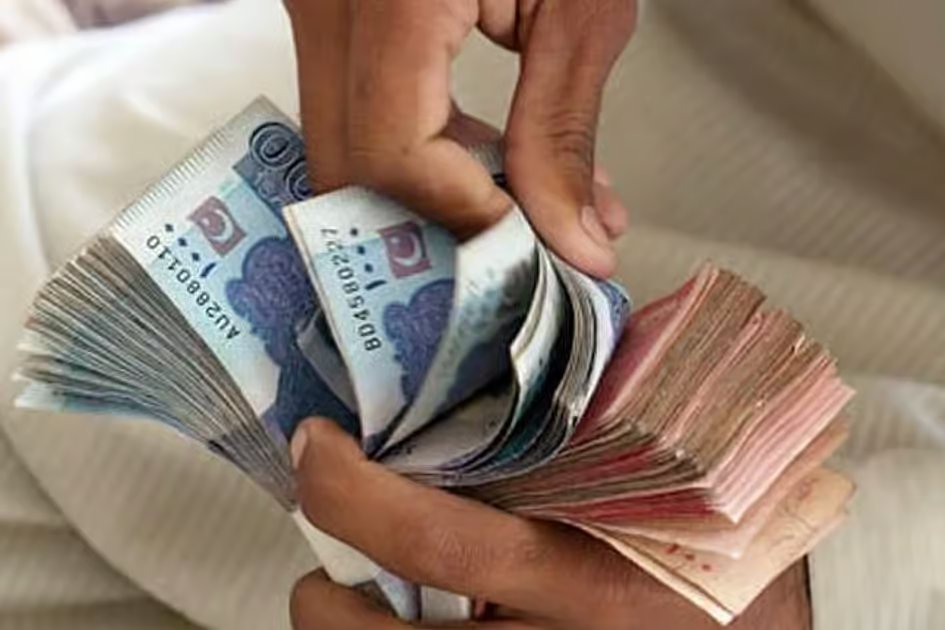
Pakistanis living in the UAE, GCC and other countries can win up to Rs16 billion ($57 million, Dh212.27 million) in prizes every year for sending remittances home through formal banking channels.
Pakistanis living in the UAE and other Gulf countries will account for 50 per cent of the total prizes every year, with the largest prize worth Rs100 million (Dh1.32 million), according to the Pasban Remittance Reward Scheme launched by the State Bank of Pakistan on Friday.
There are more than 1.7 million Pakistanis living and working in the UAE, making them the second-largest community in the country.
Stay up to date with the latest news. Follow KT on WhatsApp Channe
How the scheme works
A remittance beneficiary will qualify for the scheme if they receive the equivalent of at least $100 (Dh367) in remittances every month for three consecutive months within a quarter into a bank account.
For every $100 received in an eligible month, the beneficiary will get one digital, non-transferable entry number, or ticket, for the quarterly draw.
Higher remittances will result in more entries. For example, someone receiving $100 in one month, $200 in the second month and $300 in the third month would receive six entries in total for that quarter.
Participation is free. Banks will not charge eligible beneficiaries any fees or require them to make a payment, purchase a ticket or maintain a minimum balance to participate.
Quarterly prizes
The scheme will distribute 2,521 cash prizes worth Rs4 billion every quarter.
The prizes include:
One first prize of Rs100 million
20 second prizes of Rs25 million each
100 third prizes of Rs10 million each
2,400 fourth prizes of Rs1 million each
Overall, more than 10,000 winners will receive a combined Rs16 billion annually.
The prizes will be distributed across major remittance regions. The GCC will account for 50 per cent of the prize allocation, followed by the UK at 15 per cent, Europe at 15 per cent, North America at 10 per cent and other countries at 10 per cent.
The first prize will be open to eligible beneficiaries receiving remittances from all regions.
Draw dates
The draws will be held every quarter, with the first draw scheduled for January 15, 2027.
It will cover eligible remittances received between October 1 and December 31, 2026.
The draw will be conducted through a secure, fully digital and auditable process, according to the SBP.
The results will be published on the scheme’s dedicated website, as well as on the websites and official social media accounts of participating banks and the Pakistan Banks Association.
Remittances hit record $41.6 billion
Workers’ remittances reached a record $41.6 billion in fiscal year 2026, compared with $21.7 billion in FY2019, according to the SBP.
Jameel Ahmad, governor of the State Bank of Pakistan, said remittances support millions of Pakistani families by helping them meet household expenses and fund education, healthcare, investment and other economic opportunities.
He also noted that the SBP’s foreign exchange reserves had risen to $21.4 billion, from below $3 billion in February 2023.
The new Pasban scheme represents a shift towards a market-based model after Pakistan previously relied on government-backed home remittance incentive schemes to encourage the use of formal channels.
Muneer Kamal, CEO and secretary-general of the Pakistan Banks Association (PBA), said banks have been funding remitter incentives since July 2026, bringing the banking industry’s annual commitment to close to Rs100 billion.
The banking industry said the new scheme is intended to maintain the attractiveness of formal remittance channels while recognising the contribution of overseas Pakistanis to Pakistan’s economy.
The scheme is fully funded by Pakistan’s banking industry and will not put any burden on the government or national exchequer, according to the SBP.
The initiative is aimed at encouraging overseas Pakistanis to use formal banking channels when sending money to families and beneficiaries in Pakistan.
Source: Khaleej Times
