


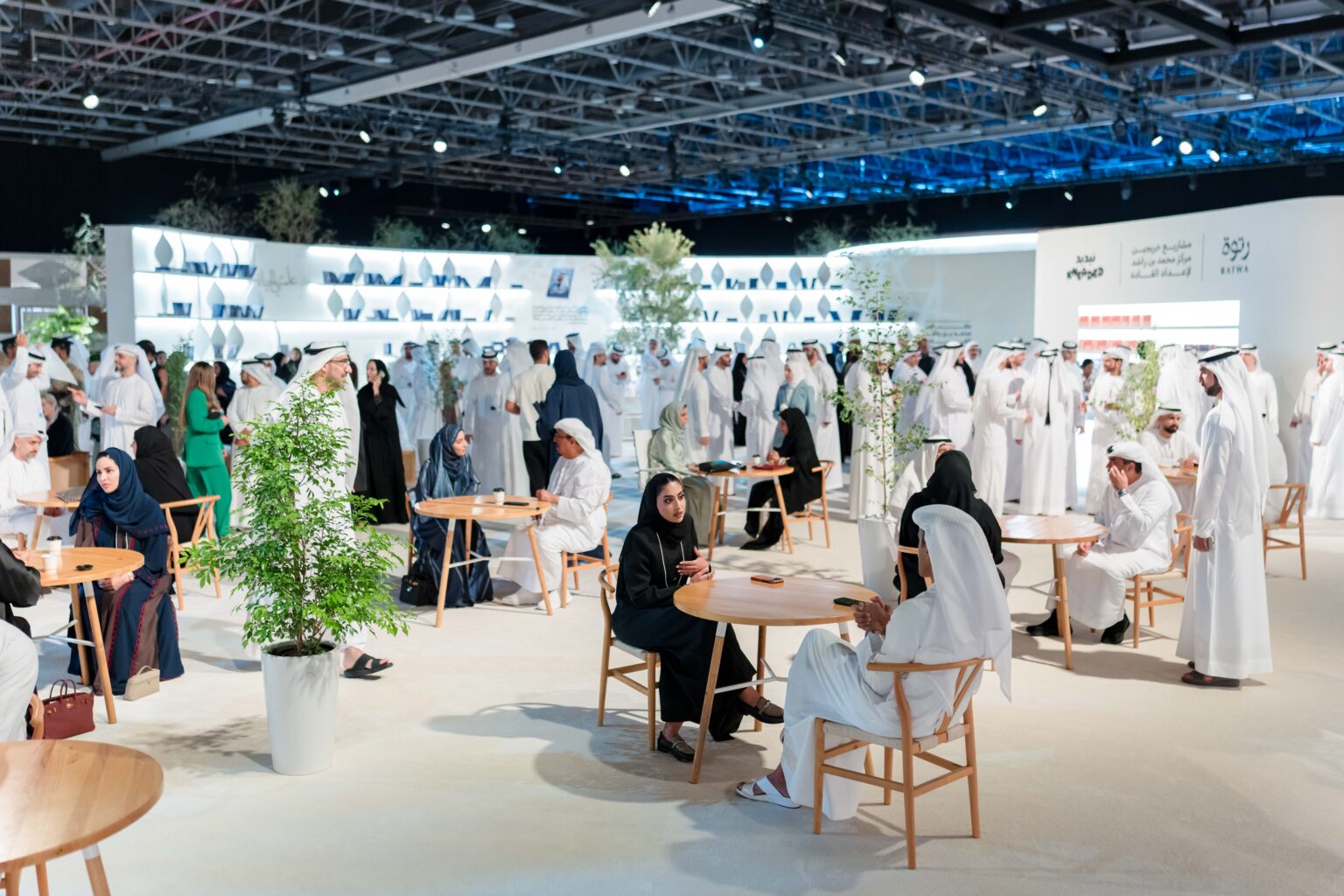
DUBAI, 13th October, 2026 (WAM) — The Mohammed bin Rashid Leadership Forum brought together government and private sector leaders and experts to reflect on Dubai’s achievements and explore opportunities to shape its next phase of development across various fields.
Organised by the Mohammed bin Rashid Centre for Leadership Development (MBRCLD), the forum featured sessions and panel discussions on tourism, trade, finance, aviation, real estate and urban development. Discussions examined major infrastructure projects, emerging technologies and changing global trends, highlighting the role of innovation and public-private collaboration in strengthening Dubai’s competitiveness.
The forum aims to strengthen partnerships and provide a knowledge-exchange platform with aims to advance Dubai’s leading position across various sectors and explore future pathways that support the emirate’s competitiveness and global leadership.
As part of the Forum, MBRCLD hosted “Coffee with a Leader”, bringing together 36 graduates of its leadership programmes with 12 prominent Dubai government leaders to strengthen professional connections and foster knowledge exchange across leadership generations.
The initiative provided graduates with opportunities to engage directly with senior leaders and gain insights into leadership, decision-making, managing challenges and navigating change across different sectors.
Participating leaders included Lieutenant General Dhahi Khalfan Tamim, Deputy Chief of Police and Public Security in Dubai; Abdulla Mohammed Al Basti, Secretary General of The Executive Council of Dubai; Lieutenant General Abdulla Khalifa Al Marri, Commander-in-Chief of Dubai Police; Saeed Mohammed Al Tayer, Managing Director and CEO of Dubai Electricity and Water Authority (DEWA) ; Lieutenant General Mohammed Ahmed Al Marri, Director-General of the General Directorate of Identity and Foreigners Affairs – Dubai; Mona Ghanem Al Marri, Vice Chairperson and Managing Director of the Dubai Media Council and Director-General of the Government of Dubai Media Office; Hessa bint Essa Buhumaid, Director-General of Community Development Authority in Dubai; Aisha Miran, Director General of Dubai’s Knowledge and Human Development Authority; Eng. Marwan bin Ghalita, Director General of Dubai Municipality; Abdulla Al Falasi, Director General of the Dubai Government Human Resources Department and Hala Badri, Director General of Dubai Culture and Arts Authority.
Each leader took part in three dialogue sessions with graduates selected from a range of sectors and professional backgrounds, none of whom had a direct working relationship with that leader.
The initiative reflects Dubai’s commitment to developing future-ready leaders, promoting continuous learning and transferring knowledge between generations, while preparing national talent to assume greater responsibilities and create lasting impact across vital sectors.
Abdulrahman Saleh Al Saleh, Director General of the Government of Dubai’s Department of Finance, and Arif Abdulrahman Ahli, Executive Director of the Planning and General Budget Sector at the Department of Finance, joined prominent financial sector leaders and experts in a panel discussion that explored global financial transformations, Dubai’s readiness to address emerging challenges, and opportunities to strengthen its position as a leading global financial centre.
Al Saleh highlighted Dubai’s integrated financial ecosystem, supported by effective fiscal policies, a flexible legislative and regulatory environment, advanced infrastructure and openness to global markets.
He stressed that “the competitiveness of financial centres is no longer measured solely by the volume of financial flows, but also by their ability to innovate, attract talent and adopt advanced technologies.” He also underscored the importance of strengthening public-private partnerships, supporting innovation and advancing digital transformation in financial services to attract global investment and contribute to the objectives of the Dubai Economic Agenda D33.
Ahli agreed that public-private partnerships are integral in advancing public finance, improving development project efficiency and supporting long-term fiscal sustainability. Dubai’s Department of Finance will host the Concordia Horizon Summit in May 2027, providing a global platform to exchange expertise, explore innovative partnership models and translate investment opportunities into projects that strengthen Dubai’s economic competitiveness and quality of life.
Discussions also examined the factors shaping global financial centres over the next decade, opportunities to attract international financial institutions, and ways to balance traditional financial expertise with future digital skills to reinforce Dubai’s position as a global hub for capital and investment.
Marwan bin Ghalita, Director General of Dubai Municipality, presented the emirate’s future development priorities during the session “Dubai Municipality and Life in Dubai 2033” at the Mohammed bin Rashid Leadership Forum, in a virtual dialogue with ‘Saeed’, Dubai Municipality’s AI-powered virtual media spokesperson.
The AED 30 billion ‘Tasreef’ project will increase rainwater drainage capacity by 700%, handling more than 20 million cubic metres daily upon completion, he said.
Dubai Municipality’s 2040 targets include planting 3.5 million trees, expanding green spaces to 187 square kilometres, achieving 11 square metres of green space per capita, and attracting 95 million annual visits to parks and recreational facilities.
Other priorities include inspecting more than 577,000 food consignments annually, ensuring 40% of new buildings use modern and smart construction technologies by 2033, and diverting 100% of waste away from landfills. Digital twins and AI will also enhance urban planning and city management, said bin Ghalita.
Recognised as the world’s cleanest city for the sixth consecutive year, Dubai continues to advance sustainable infrastructure and residents’ wellbeing.
Bin Ghalita said: “Swift decision-making, the ability to understand and anticipate the future, and transform needs and challenges into exceptional projects are what have distinguished Dubai as a model city of the future.”
He added: “We remain committed to anticipating and meeting people’s evolving needs, ensuring that Dubai continues to be the world’s best city to live, work and visit.”
Dubai’s real estate leaders and chief executives have explored global investment trends and opportunities to strengthen the emirate’s property market competitiveness and sustain its growth amid changing investor priorities and evolving international markets.
Led by Omar Hamad BuShahab, Director General of the Dubai Land Department, the panel discussion examined the challenges facing the real estate sector, emerging opportunities for growth and innovation, and ways to establish a shared vision for the industry’s next phase.
BuShahab said Dubai’s real estate sector was built on a strong foundation that enables it to identify new opportunities for growth and thrive in a rapidly changing market.
“Effective partnership with the private sector, and listening to diverse perspectives and ambitions, is fundamental to building a more competitive and sustainable future for real estate,” he said.
Participants emphasised the importance of stronger collaboration between regulators, developers and investors, with coordinated efforts needed to respond effectively to changing market requirements.
They highlighted the need to adapt to changing global real estate investment patterns and gain a deeper understanding of investors’ evolving requirements.
Eng. Khalifa Al Zaffin, Executive Chairman of Dubai Aviation City Corporation and Dubai South, discussed the strategic vision for Al Maktoum International Airport, a long-term infrastructure project designed to strengthen Dubai’s position as a global aviation, trade, tourism and investment hub.
The airport’s first development phase aims to accommodate approximately 150 million passengers annually by 2032, with ultimate capacity reaching 260 million passengers and 12 million tonnes of cargo annually.
Aligned with the Dubai Economic Agenda D33 and Dubai 2040 Urban Master Plan, the project emphasises proactive infrastructure development to support future economic and population growth.
The airport, located within Dubai South, will serve as the centerpiece of an integrated aerotropolis, connecting aviation, logistics, commerce and residential communities. Its integration with road and rail networks, public transport and Jebel Ali Port will strengthen multimodal connectivity, supply chain efficiency and international trade.
In a session titled “Al Maktoum International: The World’s New Airport,” Al Zaffin said sustainability, operational resilience and technological innovation are central to the project, incorporating resource efficiency, renewable energy considerations, automation, artificial intelligence, advanced analytics and smart systems.
The project, he said, reflects Dubai’s commitment to building future-ready infrastructure that supports economic diversification, global connectivity and sustainable growth for generations to come.
Dubai has built its position as a global trade hub by anticipating future demand rather than waiting for existing capacity to be exhausted, Essa Kazim, Chairman of DP World’s Board of Directors, said.
During a session titled “DP World: Charting the Future of Trade”, Kazim outlined the group’s evolution from a regional port operator into a global trade and logistics network.
DP World now operates more than 80 ports across six continents, employs over 125,000 people and handles about 10 per cent of global container trade, he said. Its operations extend beyond ports to include logistics services, economic zones and trade infrastructure.
Kazim said the group was entering a new phase of strategic transformation focused on improving the efficiency of its international network by integrating ports, maritime services, logistics and inland infrastructure.
“Our priority today is to ensure that this network operates efficiently as one integrated system, connecting ports, logistics and maritime services with inland infrastructure to deliver greater value to customers and make trade simpler, more efficient and more resilient,” he said.
He added that Dubai’s trade ambitions were rooted in more than a century of economic planning.
Dubai’s next phase, Kazim noted, would focus on anticipating global changes, strengthening supply-chain resilience and building the infrastructure needed to shape the future of international commerce.
In a session titled “The World’s Most Prestigious Financial District”, Essa Kazim, who also serves as Governor of Dubai International Financial Centre (DIFC), outlined the ambitious expansion of DIFC through the DIFC Zabeel District, a landmark development valued at over AED 100 billion, designed to double the Centre’s capacity and strengthen Dubai’s position as a leading global financial hub.
Spanning 7.1 million square feet, with a total gross floor area of 17.7 million square feet, the development will accommodate over 42,000 companies, 125,000 professionals and 4,000 residential units. It will feature over one million square feet dedicated to a major innovation hub and purpose-built AI campus, bringing together more than 6,000 technology companies and 30,000 technology professionals.
The DIFC Academy will expand tenfold to 370,000 square feet, accommodating 50,000 learners annually. Approximately 20% of the development will be dedicated to open spaces and public amenities, supported by advanced mobility infrastructure.
Delivered in six phases, with the first completed by 2030 and the masterplan by 2040, the project builds on DIFC’s achievements since its 2002 launch, supporting Dubai’s D33 Economic Agenda through economic diversification, innovation, talent development and an integrated business and lifestyle ecosystem.
Speaking at a session titled “The Tourist Experience in Dubai 2033,” Issam Kazim, CEO of Dubai Corporation for Tourism and Commerce Marketing, highlighted Dubai’s transformation into a leading global destination, emphasising how visionary leadership, strategic planning and economic diversification have enabled the emirate to turn challenges into opportunities for success.
He underscored tourism’s central role in the Dubai Economic Agenda D33, which aims to double the emirate’s economy. He stressed that tourism’s success extends beyond visitor numbers and overnight stays to the lasting impact of experiences that inspire visitors to return, invest, establish businesses and build their lives in Dubai.
Kazim said Dubai’s tourism performance and resilience amid regional challenges reflect the emirate’s success in translating its strategic vision into tangible results, supported by advanced infrastructure, global connectivity, service excellence, effective public-private partnerships, and long-term planning.
He also emphasised the adoption of artificial intelligence, personalised services and advanced technologies to enhance visitor experiences.
Dubai’s global aviation connectivity, strategic location linking East and West, multicultural population representing approximately 200 nationalities, international business appeal and diverse culinary offerings further strengthen its competitiveness.
Kazim concluded that trust, authenticity and consistently delivering on Dubai’s promises remain its defining advantages, reinforcing its ambition to become a destination synonymous with the future.
Tourism leaders and experts convened at the Mohammed bin Rashid Leadership Forum to review Dubai’s tourism performance in 2026 and explore opportunities to sustain growth and strengthen global competitiveness.
Moderated by Issam Kazim, the session examined visitor numbers, hotel occupancy rates, changing travel patterns and emerging growth opportunities.
Kazim highlighted innovation, investment in talent and development of distinctive tourism experiences as priorities for the sector’s next phase of growth.
Discussions also explored opportunities to diversify Dubai’s offering through cruise, cultural and educational tourism, culinary experiences, film production, and health and wellness tourism, alongside continued improvements to infrastructure and service quality.
Participants emphasised stronger collaboration between government entities and private-sector partners to sustain the sector’s growth and enhance competitiveness.
The discussions underscored Dubai’s ambition to rank among the world’s top three tourism cities, in line with the Dubai Economic Agenda D33 and the Dubai 2040 Urban Master Plan.
Source: Emirates News Agency
